
The “VC Returns Suck” Narrative (And How We All Spin The Data)
Two links were dominating our VC slack this week.
The first is Dan Primack’s newsletter that flatly declares: “VC returns kinda suck.” The second is a viral new dashboard analyzing 49 mega-funds, where Trace Cohen concludes: “The data tells a clear story: scale compresses returns.”
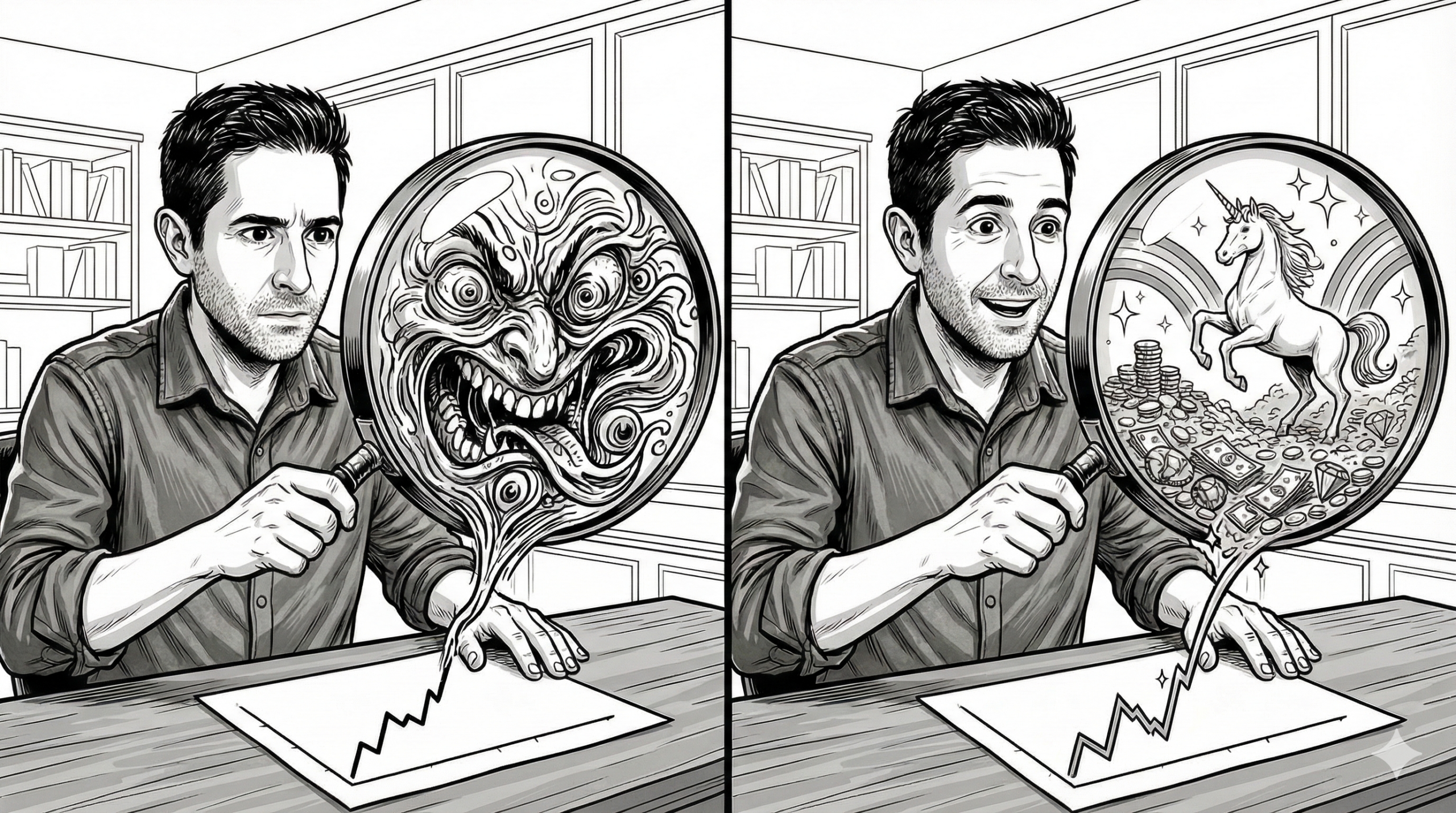
It is fascinating watching how quickly everyone uses the data on X and LinkedIn to fit their own narrative. Honestly, it’s starting to feel less like finance and more like politics. Truth-seeking is out, stumping for your capital strategy is in.
As a champion of the “artisan” micro-fund model, my immediate instinct was to retweet the dashboard and yell, “See! I told you so!”
But we were debating this internally this morning, and my partners pointed out that if we want to be intellectually honest, the reality is much messier.
Here are five questions we debated:
1. How do you compare across vintages when the business has changed so much?
The dashboard’s data looks damning for the mega-funds, but one of my partners correctly called out a structural flaw: The returns are heavily weighted to older vintages.
Ten years ago, funds were much smaller, and those older vintages have actually had the time to mature and generate DPI. The massive $2B+ funds are largely concentrated in recent vintages (2020-2025). They are simply too young to judge. We are comparing fully-baked small pies to half-baked, but giant piles of dough. It’s easy to say they taste worse.
2. Is a 1:1 ratio of funders to founders sustainable? Survivable?!
The compression equation isn’t just about the size of the funds, it’s about the total number of funds.
At the peak in 2021, there were roughly 8,000 active VC firms in the US.
Do you know how many viable early-stage/seed deals happened that year?
Roughly 8,000.
8,000 firms for 8,000 startups. Oh my.
When the ratio of capital allocators to fundable companies reaches 1:1, it’s no surprise that returns compressed.
3. Are we extrapolating off a few great vintages?
Looking at the dashboard made me realize something else. We treat the “Rules of VC” like laws of physics:
“You must get 20% ownership.”
“You must fight for pro-rata.”
“A concentrated portfolio is the only way to win.”
In reality, so many of these sacred tenets are just loose heuristics. They are based on incredibly sparse data extrapolations from a few historical outliers.
We built an entire asset class religion around a handful of lucky 1990s and 2010s vintages, and now we are shocked when those “rules” break at scale.
4. Are we all suffering from the “top decile” delusion?
The median VC DPI for post 2021 funds is abysmal. The top quartile is still grim.
The old running joke in our industry is that 80% of GPs believe they are in the top 10%.
It’s the only way to mentally justify staying in the game when the median returns are this bad.
This isn’t a business where median performance makes any sense, and rationalizing won’t help anyone.
5. Is TVPI a viable KPI for a massive asset class?
One more thing that doesn’t get enough attention: how are these underlying startups actually being valued?
TVPI is heavily influenced by marks. And marks are, in many cases, managers grading their own homework.
If you really want to understand performance, you’d need to look underneath the headline multiples and see how portfolio companies are being valued, how conservatively (or aggressively) they’re being marked, and how those marks translate into reported TVPI.
Two funds can show similar paper performance with very different valuation philosophies. Until liquidity shows up, a lot of this debate is about opinions embedded inside models.
It turns out that running a VC fund, with its long sales cycles and varieties of strategies, can be a murky dark art. I guess it’s not that different in some ways than running a start-up 😉
FWIW, this is why we keep our fund size small. We aren’t macro oracles or particularly interested in empire-building. From our perspective, we think investing $500K-$3M into promising founders is a viable business model and one we’re excited to continue.